Amazing Bird Facts

Birds in general display a wide range of behaviors. All though some of the behaviors may strike humans as being amazing, most behaviors help animals survive in their environments. Take a look at some of the interesting ways birds cope with the world around them.

  • The Woodpecker Finch of the Galapagos Islands uses a cactus spine or twig to probe in to tiny holes and cracks for insect grubs. As the grub wriggles out, the finch drops the tool and nabs it. Other Galapagos finches occasionally use this technique.

  • Some birds, such as Eurasian Cuckoos, lay their eggs in the nests of other birds. Cuckoos lay eggs that mimic those of the host species in color. After hatching, the young cuckoo shoves the other eggs and young out of the nest. The foster parents devote all their energy to raising the young cuckoo that grows larger than themselves.

  • Phalaropes spin rapidly like a top while sitting on the water. This action creates a whirlpool of water which sucks tiny plankton to the surface. The phalarope picks up the food with its long, narrow bill.

  • Oxpeckers feed on ticks and blood-sucking flies that live in the hair of oxen, rhinos, and other large African mammals. The oxpecker benefits by having a constant source of food. The mammal benefits because the bird eats insects that carry disease. Oxpecker tails are stiff like those of woodpeckers to help brace them on the sides of their mammal hosts.

  • Male bowerbirds of Australia and New Guinea build elaborate bowers to woo females. Depending on the species, bowers may consist of parallel hedges of twigs and grass or be made of twigs leaned up against a sapling, like a thatched hut. These can be nine feet high! Males decorate a dance stage with neat piles of colorful and shiny objects such as shells, flowers, fruits, glass, and coins. Each species of bowerbird has its own color preference for objects and the dullest-colored bowerbirds construct the fanciest bowers. Satin Bowerbirds paint their bower with colored fruit pulp using a bark brush.

  • Frigatebirds harass smaller birds, such as boobies, stealing their fish or forcing them to disgorge a fish they just swallowed. These aerial pirates then seize the fish in midair. Frigatebirds also pluck fish from the water's surface. They cannot land on water because their feathers are poorly water-proofed and, with their long, thin wings, frigate birds would not be able to get enough of a down stroke to take off again.

  • Shrikes often impale their prey- lizards, mice, small birds, and insects -on a thorn or barbed-wire fence to cache it. Other birds store food, such as seeds, as well. In cold climates, owls may store their prey frozen, then thaw it out to eat by sitting on it like an egg.

  • Long-legged birds often stand on one leg during cold weather to conserve heat. By drawing one leg up near the warmth of the body under the belly feathers, the bird cuts in half the amount of body heat lost through its bare legs.

  • Green Herons sometimes drop live insects, berries, or other objects onto the water's surface to attract fish. When an inquisitive fish appears, the heron grabs it with a quick thrust of the bill.

  • A few cave-dwelling birds use "echolocation" to find their way in the dark, just like bats. Oilbirds and some swiftlets make small clicking sounds and use the echoes to gauge distances in the dark caves where they nest.
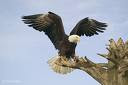
  • African honeyguides, relatives of the woodpecker, feed on beeswax. They rely on people or honey-badgers to break apart the beehives so they can get to the wax. Honeyguides have evolved special calls and actions to lead these honey-eating mammals to a hive they've spotted.

Ten things you probably didn't know about Africa:

  1. The Nile is the longest river in the world, flowing through Uganda, Ethiopia, Sudan and Egypt - if all the bends in the river were straightened out, it would flow from the Equator right up to the Scottish Highlands.
  2. Many children in Africa don’t get the chance to go to school. If you grew up in Mali in west Africa, for example, you’d only have a one in three chance of being able to go to primary school. Puts things in perspective rather yes?

  3. Four of the five fastest land animals live in Africa – the cheetah, which can run at an amazing 70 miles per hour, wildebeest, lion and gazelle.
  4. Lake Malawi in southern Africa is home to around 500 different types of fish. That’s more than anywhere else in the world! Gosh!
  5. Africa is almost an island. Its only connection to other land is the tiny Sinai Peninsula in Egypt.
  6. Africa is the home of the Human species, which developed there about 5 million years ago.
  7. More people are killed in Africa by crocodiles than by lions. We probably should include crocs on our scary stuff page .. oh well, too late!
  8. The banjo as we know it originated from a single-string, gourd-bodied African lute (sometimes called the "hodu") which the Griots of West Africa played to accompany storytelling. Now, bet you feel better for knowing that!
  9. Only three countries in the world are bigger than the Sahara Desert – Russia, Canada and China. The Kalahari Desert in southern Africa covers an area larger than France.
  10. The only street in the world to house two Nobel Peace prize winners is in Soweto, South Africa. Nelson Mandela and Archbishop Desmond Tutu both have houses in Vilakazi Street.

Rainforest..is it the end

We are losing Earth's greatest biological treasures just as we are beginning to appreciate their true value. Rainforests once covered 14% of the earth's land surface; now they cover a mere 6% and experts estimate that the last remaining rainforests could be consumed in less than 40 years.


One and one-half acres of rainforest are lost every second with tragic consequences for both developing and industrial countries.

Rainforests are being destroyed because the value of rainforest land is perceived as only the value of its timber by short-sighted governments, multi-national logging companies, and land owners.

Nearly half of the world's species of plants, animals and microorganisms will be destroyed or severely threatened over the next quarter century due to rainforest deforestation.

Experts estimates that we are losing 137 plant, animal and insect species every single day due to rainforest deforestation. That equates to 50,000 species a year. As the rainforest species disappear, so do many possible cures for life-threatening diseases. Currently, 121 prescription drugs sold worldwide come from plant-derived sources. While 25% of Western pharmaceuticals are derived from rainforest ingredients, less that 1% of these tropical trees and plants have been tested by scientists.

The Amazon Rainforest covers over a billion acres, encompassing areas in Brazil, Venezuela, Colombia and the Eastern Andean region of Ecuador and Peru. If Amazonia were a country, it would be the ninth largest in the world.


The Amazon Rainforest has been described as the "Lungs of our Planet" because it provides the essential environmental world service of continuously recycling carbon dioxide into oxygen. More than 20 percent of the world oxygen is produced in the Amazon Rainforest.

More than half of the world's estimated 10 million species of plants, animals and insects live in the tropical rainforests. One-fifth of the world's fresh water is in the Amazon Basin.


One hectare (2.47 acres) may contain over 750 types of trees and 1500 species of higher plants.